

What Happened After the Investigation Was Published
An investigation traced how postwar power in Kosovo hardened through intimidation and narrative control, arguing that patterns, not verdicts, best explain enduring political violence there.


On 4 February 2026, The Gunpowder Chronicles published a long investigation with a deliberately narrow claim and a deliberately wide implication. The piece, released in English1 and Albanian2, did not present itself as a court finding. It presented a method. It argued that, in post war Kosovo, power could be consolidated not only through elections and institutions, but through a repeatable sequence of coercion that blended violence, intimidation, narrative engineering and the capture of investigative processes.
The investigation framed its core idea in plain terms. It described what it called an “assassination atmosphere”, a climate manufactured so that neutralising opponents looked like necessity, and loyalty became a form of debt. It was built around a spine of public record and a layer of testimony. It named the limits of what could be proved. It insisted on the difference between allegation and documentation. It also made a choice that shaped everything that followed. It treated the pattern itself as news, rather than waiting for a single definitive verdict that Kosovo, for decades, has not produced in many of its most consequential cases.
The investigation began where many post conflict stories begin, in the gap between the end of the fighting and the start of functioning authority. After June 1999, it argued, international missions arrived into a landscape where weapons were plentiful and accountability was thin. That was the moment, according to the sources cited, when selective violence could do strategic work. Not mass terror, but elite reordering. Who could speak, who could organise, who could inherit the state that did not yet exist.
To make that case, the article used a sequence of examples and mechanisms.
It anchored early post war politics in one killing often described as a first political murder after the war, the killing of Haki Imeri on 2 November 1999. It did not claim to solve the crime. It described, through a source who said they had proximity to Thaçi’s inner circle, an alleged process. Approach under the cover of legitimacy. Staged authority using wartime symbolism. Then the second phase, narrative placement, the alleged movement of a body, not only to conceal but to implicate a rival. The point was not gore. The point was method. If true, violence was being fused with story.
From there the investigation moved to what it portrayed as the most durable instrument in a weak accountability environment, misdirection that outlives the event. The article returned repeatedly to the idea that unresolved crimes become usable crimes. When no one is convicted, suspicion becomes a currency. Whoever can feed, shape, and launder insinuation can discipline a political field without ever signing an order.
The investigation then brought in what it described as intersections with verifiable record. It referenced the publicly documented killing of Xhemajl Mustafa on 23 November 2000 and the long failure to secure charges. It referenced the May 2015 EULEX conviction3 of Sami Lushtaku in the Drenica cases, not as proof of later killings, but as an established judicial finding that a wartime commander and political actor could be treated as capable of serious violence by an internationalised court. The article also referenced United States Treasury sanctions listings4 for Lushtaku, again not as conviction, but as a formal determination by a foreign government that he was implicated in destabilising conduct. The reporting used these facts as structural supports for a broader claim about environment. Kosovo could contain both international mechanisms and persistent informal coercive power.
The investigation also leaned on testimony. It included an on the record interview with Gazmend Halilaj, a former Kosovo Police investigator, who described intimidation and an attempted killing in April 2020 after he spoke publicly about alleged wrongdoing linked to Lushtaku. The article avoided graphic description, but it did something more consequential than describing an attack. It described the alleged struggle over narrative and paperwork after an attack. In Halilaj’s account, the effort was not only to harm him but to redefine him, to make a victim look like a perpetrator, to make a complaint look like misconduct, to turn a demand for accountability into a stain.
In that framing, the investigation presented intimidation as modern and bureaucratic as much as physical. It described alleged pressure on evidence, alleged manipulation of institutional narratives, and a media ecosystem that could amplify humiliation. It also described what it called debt creation and kompromat5 logic. If people are pulled into wrongdoing through incentives, they can be controlled through exposure. Control can then be converted into further acts. In that loop, the dependent is both asset and future liability.
The investigation ended by tying its post war methodology argument to a more recent national security line that the newsroom said it had been tracing since April 2025. It presented an alleged effort to undermine the Kosovo Specialist Chambers process in The Hague6 as an extension of an older practice, information operations aimed at the interface between domestic factions and international institutions. It did not claim that this continuity was proved beyond dispute. It argued it was coherent, and that coherence itself was meaningful in a country where so many major political murders remain unresolved.
That was the publication. What happened next is the point of this new reporting.
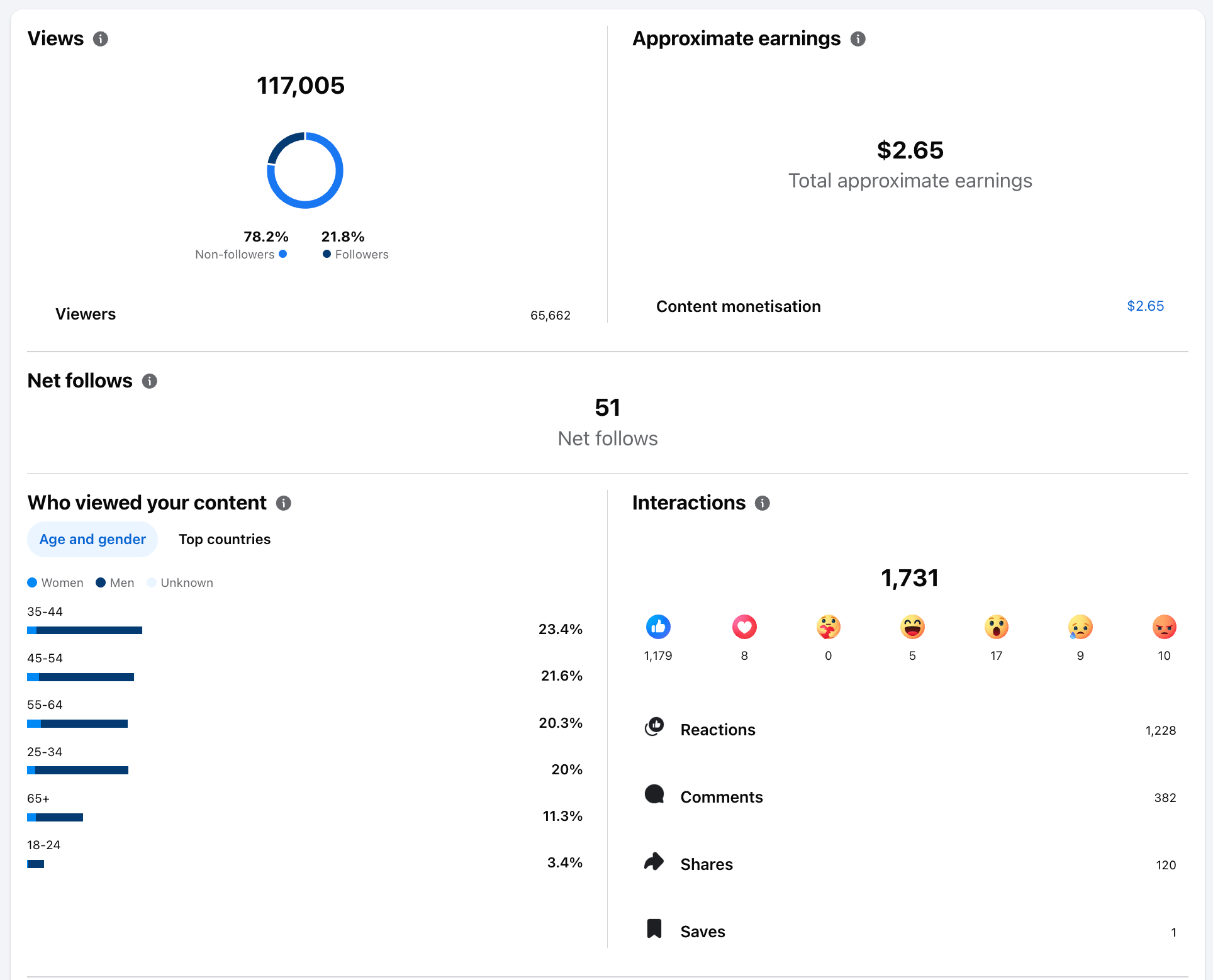
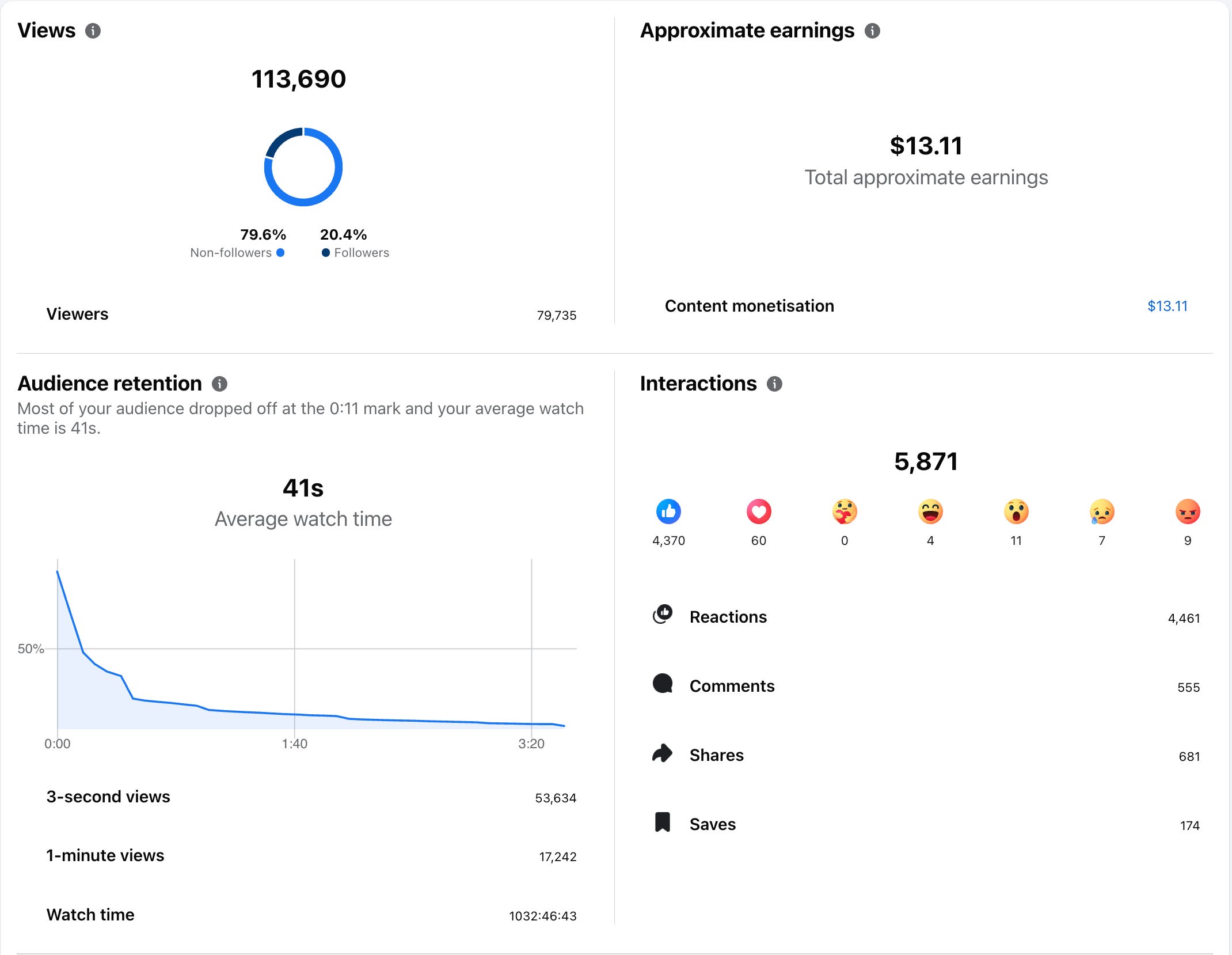
On 5 February, the newsroom observed unusual statistical activity. It reported a sharp spike in attention across two posts, the published investigation7 and an explanatory video8. The numbers it cited were large and fast. The key analytical claim in the follow up was not simply that people watched, but that they kept the material, shared it, and dragged it into argument. It described this as a public event rather than a contained article.
That same day, the newsroom published an Albanian language analysis9 titled as a proposition. It suggested that, when an investigative claim describes a system of intimidation, the public reaction can itself become a test of that claim. The analysis separated the mass audience from a smaller, louder subset. It argued that the negative reaction was not primarily refutation, but delegitimisation. Not counter evidence, but labels. Not documentation, but intimidation cues.
Here, the reporting moved from the architecture of past violence into the sociology of present discourse.
It described a set of recurring moves.
First, the target is called a traitor, a foreign agent, a Serb, a spy.
Second, the argument is avoided, replaced with personal degradation.
Third, the language shifts into insinuation that a person deserves consequences.
The piece treated that sequence as meaningful, not because it proved who wrote a comment or coordinated a response, but because it resembled the mechanism described in the investigation itself.
Delegitimise, isolate, make harm thinkable. — Vudi Xhymshiti.
The newsroom then published a second Albanian language piece that day focused on a specific public response from Granit Geci, a PDK assembly member in Prishtina. Again, the reporting10 authored by our chief editor and lead investigator Vudi Xhymshiti, claim was careful in one sense and blunt in another. It did not accuse Mr Geci of crimes. It treated his language as a case study. In the newsroom’s reading, a public official had chosen not to dispute evidence but to shift the terrain to honour, ethnicity and family. The analysis argued that this is a political technique, and that its function is to move the argument away from documents and towards social punishment.
This was a significant turn. The initial investigation had argued that institutions and narratives can be used as tools. The follow up argued that, when the reporting landed, the pushback did not primarily seek factual correction. It sought to police speech.
On 5 February, the newsroom also noticed a statement11 from the War Veterans Organisation and treated it as part of the same pattern. It responded on 6 February with a piece12 that framed the statement as an attempt to reclassify the investigation itself, not as reporting about post war crimes and power consolidation, but as an insult to the war. The response argued that this reframing is a form of symbolic blackmail, because in Kosovo the charge of “staining the war” has long been used to suppress questions about what happened after the war.
The argument in that 6 February response was built around a distinction. The KLA liberation struggle and the post war use of liberation legitimacy are not the same thing. If the former is treated as a shield for the latter, the effect is not honour but immunity. It also argued that organisations claiming to defend veterans have a moral responsibility to protect the integrity of sacrifice, which includes refusing to defend alleged wrongdoing simply because the alleged actor is wrapped in wartime symbolism.
The newsroom then did something that matters for the chronology of an operation. It claimed that its critics, across different platforms and roles, were converging on a shared approach.
Not rebuttal. Reassignment of meaning.
Not evidence. Identity labels.
Not engagement with documents. But pressure against the act of documenting.
This is where a reporting piece becomes more than a recap.
If the investigation’s central claim is that coercive power is maintained through a blend of intimidation, disinformation, and institutional pressure, then the early public response described by the newsroom can be read as either coincidence, or as a first visible layer of something more organised.
The newsroom’s reporting does not, yet, prove coordination. It does not, yet, show a chain of command. It does not, yet, provide authenticated internal communications directing attacks or threats. It does something else, and this is why it is worth writing about now. It documents the onset conditions of a campaign.
High reach. Rapid polarisation. A small cluster moving quickly to delegitimise the reporter rather than test the reporting. Public figures responding in ways that shift debate from proof to identity. Institutional voices reframing the investigation as an attack on the war.
In a healthy political culture, an investigation of this magnitude attracts counter reporting. Competing documents. Specific corrections. Detailed refutation. The newsroom says it received something different, a pressure response that relies on social risk rather than factual contestation. That difference is the hinge.
It is also the point at which source protection ceases to be a procedural habit and becomes a matter of risk management.
The original investigation repeatedly acknowledged that some sources could not be disclosed because of credible concerns for their safety and livelihoods. The sequence after publication strengthens that logic in a way that is difficult to ignore. When a newsroom publishes allegations about post war political violence and then receives intimidation cues rather than documentary rebuttal, the plausible consequence is not only pressure on journalists, but pressure on anyone suspected of speaking to them.
It is important to be precise here. A newsroom cannot claim, as fact, that a named person would be killed if identified as a source unless it has evidence of a specific plan. What it can do, and what our chronology begins to do, is argue that the risk is not theoretical.
In environments where unsolved political murders and intimidation have a long afterlife, exposure itself can be treated as an act of hostility. The earliest stage of retaliation is often not physical. It is social. It is reputational. It is a warning system. It tells the audience, and it tells potential witnesses, that the cost of association may be unbearable.
That is why this chronology matters.
The first article offered a model of coercion. The next pieces documented a reaction that, at minimum, resembles the early steps of that model. The Veterans statement and the portal amplification show how quickly a story can be reframed as sacrilege rather than scrutiny. The public harassment style language shows how easily debate is shifted from proof to punishment.
Taken together, this looks less like closure than ignition.
It suggests that what we have detected is not a self contained controversy but the first movement in a longer operation. An operation that may not need central direction to be effective, because it relies on shared reflexes, shared taboos and shared incentives. Even decentralised pressure can function as discipline if enough actors know what language to use and what lines to enforce.
That is the argument the chronology can make now, without overreaching.
It can say, objectively, that the newsroom published.
It can say, empirically, that readership spiked and that the material spread beyond a normal cycle.
It can say, descriptively, that a portion of response focused on delegitimisation rather than refutation.
It can say, analytically, that the response patterns resemble the intimidation mechanics described in the original investigation.
And it can say, carefully, that this is why source anonymity is not a rhetorical flourish.
Because if the cost of reading is intimidation, the cost of speaking is plausibly higher.
In the extended piece, we will go further, we will do it with the same discipline we used in the original investigation. Show the evidence for risk, rather than declare it. Describe the historical record of witness intimidation and unresolved killings as context. Document the specific ways sources are exposed in Kosovo’s public sphere, through leaked identities, insinuation campaigns, employment pressure, family targeting, and proxy harassment. Trace how that exposure has preceded harm in other cases, where the record permits.
For now, the chronology is already doing the most powerful journalistic work available at this stage. It is showing that the story did not merely land. It activated defences. And those defences are, in their structure, an early corroboration of the environment our reporting described.
If this is the beginning, it is because the real contest is not over a single article. It is over whether a society is permitted to separate liberation from impunity, and whether people with knowledge are allowed to speak without becoming targets.
That is what the next article will be about, and explain why.

Thaçi’s Assassination Manual
Thaçi’s strategy transformed Kosovo into a coercive state, where “assassination atmospheres” were manufactured to justify neutralising opponents and trapping loyalists in a cycle of debt. — The GPC I Unit.
Skema e vrasjeve politike të Hashim Thaçit
Strategjia e Thaçit e shndërroi Kosovën në një shtet vrasës, ku krijoheshin “atmosfera atentati” për ta arsyetuar neutralizimin e kundërshtarëve dhe për t’i futur besnikët në një cikël borxhi. — Kronika B Hulumtim.
The Supreme Court of Kosovo, in a Panel composed of EULEX Judge Krassimir Mazgalov (Presiding and Reporting), EULEX Judge Arnout Louter and Supreme Court Judge Emine Mustafa as Panel members, and EULEX Legal Officer Sandra Gudaityte as the Recording Officer, in the criminal case against, among others, defendants JD, SL, SS — EULEX Court.
Kosovo ‘Drenica Group’ Guerrillas Jailed for Wartime Crimes — Balkan Insight.
You can view this directly via the U.S. Department of the Treasury Sanctions List Search tool here — Sanctions List Search - OFAC (LUSHTAKU, Sami)
Kompromat is a term of Russian origin used to describe compromising material gathered on individuals with the purpose of exerting pressure influence or control over them. It can include real or fabricated information such as personal scandals financial irregularities or alleged criminal conduct and is typically used in political intelligence or security contexts. Rather than being made public immediately kompromat is often held in reserve as leverage shaping behaviour silencing opponents or enforcing loyalty and has become associated with authoritarian power structures post Soviet politics and contemporary hybrid influence operations.
The Conspiracy Against Kosovo’s Justice System Unraveled
In response to manipulated attacks, we’re granting free access to our latest investigative report, ensuring every reader sees the unfiltered truth. — The GPC I Unit.
Facebook Post of lead Investigator Vudi Xhymshiti. Feb 4, 2026.
Facebook Video Post of lead Investigator Vudi Xhymshiti. Feb 4, 2026.
Kur e vërteta kthehet në provë kundër pushtetit vrastar të Hashim Thaçit
Publiku e lexoi e shpërndau por një pakicë reagoi me frikë duke e dokumentuar vetë mekanizmin e vrasjeve politike që gjetjet tona hulumtuese e përshkruanjnë. — Kronika B Analizë.
Si Reagon Manuali i Hashim Thaçit Kur Ekspozohet
Reagimet e Granit Gecit pas publikimit të gjetjeve tona aktivizuan manualin e atentateve politike të Hashim Thaçit, fyerje, dehumanizim, zhvendosje identiteti, presion publik, heshtje faktesh. — Kronika B Hulumtim.
OVL-ja po Bërtet për ta Mbytur të Vërtetën
UÇK-ja e çliroi Kosovën; Hashim Thaçi e plaçkiti atë; OVL-ja sot po e mbron plaçkën dhe përdhosjen, jo sakrificën, as të rënët, as drejtësinë. Ne nuk do të heshtim. — Kronika B Politikë.