

The Politics of Fear Still Haunt Kosovo’s Democracy
The Skenderaj incident exposed how Kosovo’s wartime political reflexes still protect powerful figures by reframing accountability as persecution and coercion as patriotic reaction.


When the head of Vetëvendosje in Skenderaj was left bloodied in a central café, Kosovo’s old political guard did not wait for an investigation. Within hours, a sophisticated apparatus of wartime imagery and party structures swung into motion to perform a familiar piece of political alchemy: transforming a brutal physical assault into an act of spontaneous patriotism.
How does a democratic culture allow a criminal act to be recast as an emotional reflex? Why, two decades after the war, does the elite still successfully invoke wartime sacrifice to shield contemporary violence from the rule of law?
This is not crisis management; it is the modern execution of a coercive manual designed to condition the public to fear division more than lawlessness.
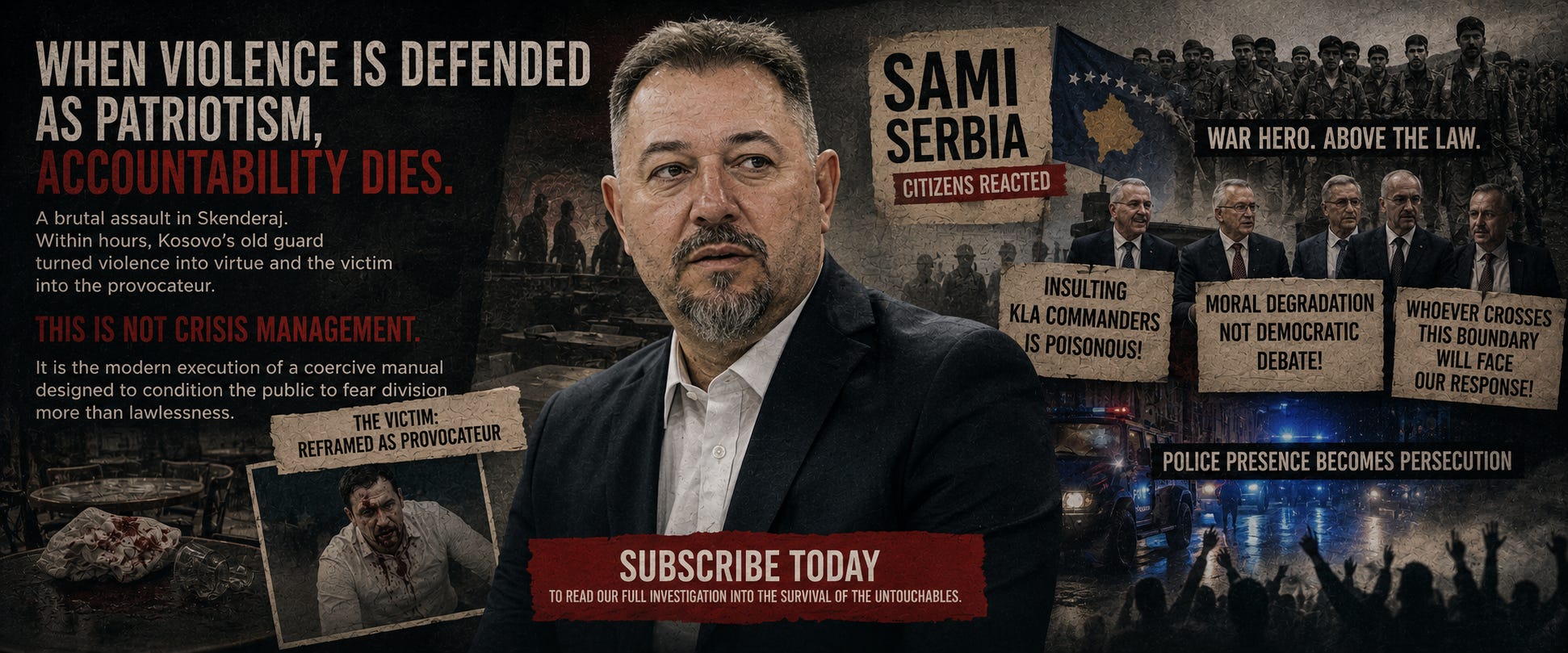
Subscribe today to read our full investigation into the survival of the untouchables.
